
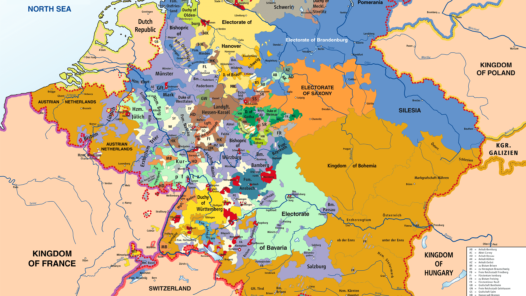
The Holy Roman Empire (800-1806) was a collection of highly autonomous political entities, including duchies, principalities, archbishoprics, bishoprics, landgraviates, margraviates, imperial free cities, imperial abbeys, imperial knights and...

Charles-Élie de Ferrières describes the various seditious acts undertaken by the non-juring clergy as they try to undermine the revolutionary regime.

Genevan journalist Mallet Du Pan attacks the Legislative Assembly for its immoral and unjust decree against the nation’s emigrants.
Historian Charles Mallet details the state of the Feuillant Club in the new Assembly, and explores the characteristics and politics of the Brissotins.
As the Legislative Assembly gathered in Paris in October 1791, a new generation of revolutionaries were forced to confront a multitude of threats. The solutions embraced by the deputies were both drastic and controversial. “So grave were the...
Jacques Guillaume Thouret and Madame de Staël recall the King’s acceptance of the Constitution of 1791, and the false sense of hope it inspired.
Historian Henry Packwood Adams details an alternative framework in which to analyse the constitution. Rejecting the mainstream approach, Adams instead focuses on another revolutionary actor as he argues that the Constitution of 1791 makes perfect...

With the democrats on the run, the newly established Feuillant Club had an opportunity to revise the constitution and cement its power. King Louis XVI accepts the Constitution of 1791, but historians and contemporaries alike criticise the document...

Explore the anti-royalist and pro-republican sentiment produced by the revolutionary press after the King’s failed escape. Jacques René Hébert viciously denounces Louis XVI and foreshadows his future fate.

Examine King Louis’ official deposition justifying his attempted escape from Paris (not France….. supposedly).